News
Croda Singapore to adopt NTU spin-off NanoSun's innovative water treatment technology
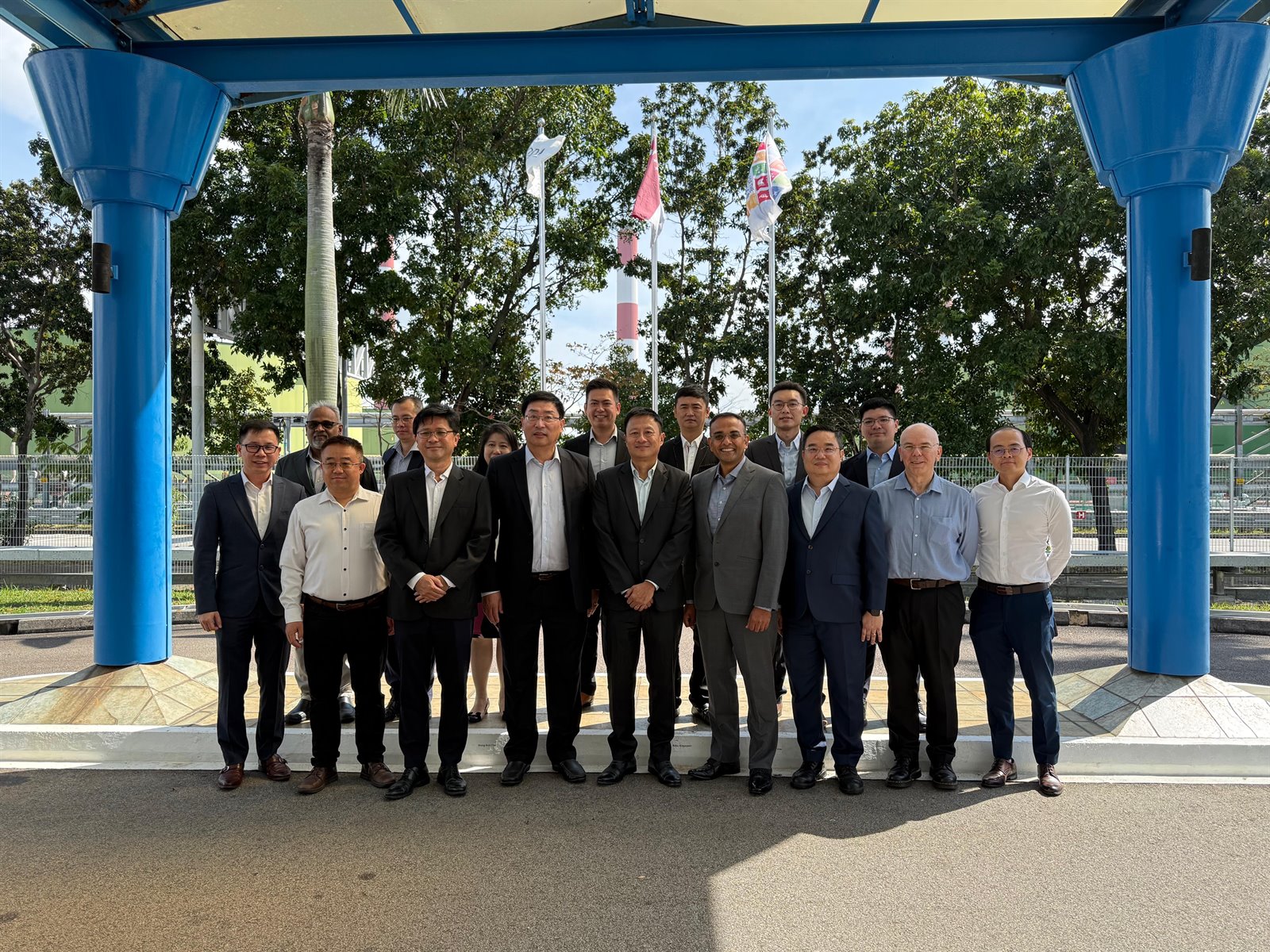
Croda Singapore, Asia's headquarters of Croda International, a leading global specialty chemicals company, has partnered with NanoSun, a spin-off company from Nanyang Technological University, Singapore (NTU Singapore), to build an advanced wastewater treatment plant at its Seraya manufacturing site in Jurong Island.
The project is a significant step from test-bedding to full-scale deployment, following a successful trial under the Jurong Island Innovation Challenge (JIIC), an initiative by JTC and Enterprise Singapore.
With the new plant, Croda aims to significantly cut its reliance on freshwater sources while reducing carbon emissions by 25 per cent compared to current industry benchmarks.
NanoSun's water purification technology was first tested at Croda's facility with a pilot-scale plant under Singapore's National Water Agency PUB's Industry Track, which supports the development of innovative water solutions.
The new full-scale plant is designed to treat up to 7,000 cubic meters (7 million litres) of wastewater per month, equivalent to 2.7 Olympic-sized swimming pools, and is expected to be fully operational by the end of 2025.
This marks the largest application of NanoSun's technology, alongside a similar deployment in Hong Kong.
Launched in August 2021, JIIC invited startups and small and medium enterprises (SMEs) to tackle key challenges on Jurong Island, including energy efficiency, emissions reduction, and waste and water management.
A global leader in speciality chemicals, Croda supplies ingredients for sectors such as pharmaceuticals, personal care, and industrial applications.
As part of the challenge, the company sought an advanced solution to treat high-strength wastewater, which accounts for a quarter of its total output and currently requires external processing. It also aimed to enable sustainable water reuse in its operations.
Through JIIC, Croda was matched with NanoSun to develop a tailored treatment system that enhances water recovery while improving sustainability in its manufacturing processes.
Mr Babu Alagappan, Managing Director of Croda Singapore, stated that “Sustainability is at the heart of Croda's operations, and we continuously seek innovative ways to reduce our environmental footprint.” He noted the partnership would “reduce water consumption by at least 70% once the plant becomes fully operational.”
Mr Wong Ann Chai, Managing Director of NanoSun, expressed enthusiasm about the implementation, stating that “NanoSun is making great strides in industrial wastewater treatment and reclamation, helping industries achieve sustainability while lowering operating costs.”
Mr Tan Boon Khai, Chief Executive Officer of JTC, remarked that “Jurong Island lies at the heart of our sustainability endeavours” and highlighted how the partnership “exemplifies how industry-led solutions can advance our collective vision.”
NanoSun's solution features a patented high-performance filtration membrane, produced using a 3D-printing process infused with titanium dioxide particles, giving it self-cleaning properties.
Its performance is further enhanced by a new confined nano-bubble process that improves filtration efficiency. The nano-bubble technology works by generating ultra-fine gas bubbles, typically smaller than 200 nanometers, which stay suspended in water longer than regular bubbles.
These tiny bubbles increase the surface area for chemical reactions, helping to oxidise and break down stubborn pollutants, including organic compounds and industrial chemicals that conventional treatment methods struggle to remove.
This innovative process speeds up contaminant breakdown, thus improving water purification quality and making the treated water suitable for reuse in manufacturing.
The deployment of NanoSun's technology supports Singapore's long-term water sustainability goals, which focus on reducing industrial water consumption and increasing water reuse to strengthen the country's water resilience.
Associate Professor Darren Sun, Co-founder of NanoSun and a faculty member at NTU's School of Civil and Environmental Engineering (CEE), noted that the technology was “developed to transform industrial wastewater into a valuable resource.”
NEWater is Singapore's high-grade reclaimed water, produced through advanced filtration and disinfection, primarily used to support industrial and non-domestic water needs.
This project represents collaboration between industry, academia and research partners, demonstrating how public-private partnerships can drive technological advancements for sustainable water management.
In 2021, NanoSun was announced as the winner of JIIC, where it was awarded up to S$1 million in co-funding to develop a treatment solution for Croda.
The year-long pilot project was designed and implemented under PUB's Industry Track, with support from Enterprise Singapore (ESG) and engineering expertise from NTU CEE.
With this system in place, Croda expects to convert nearly all its industrial wastewater into reusable water, reducing reliance on fresh water and lowering environmental impact.